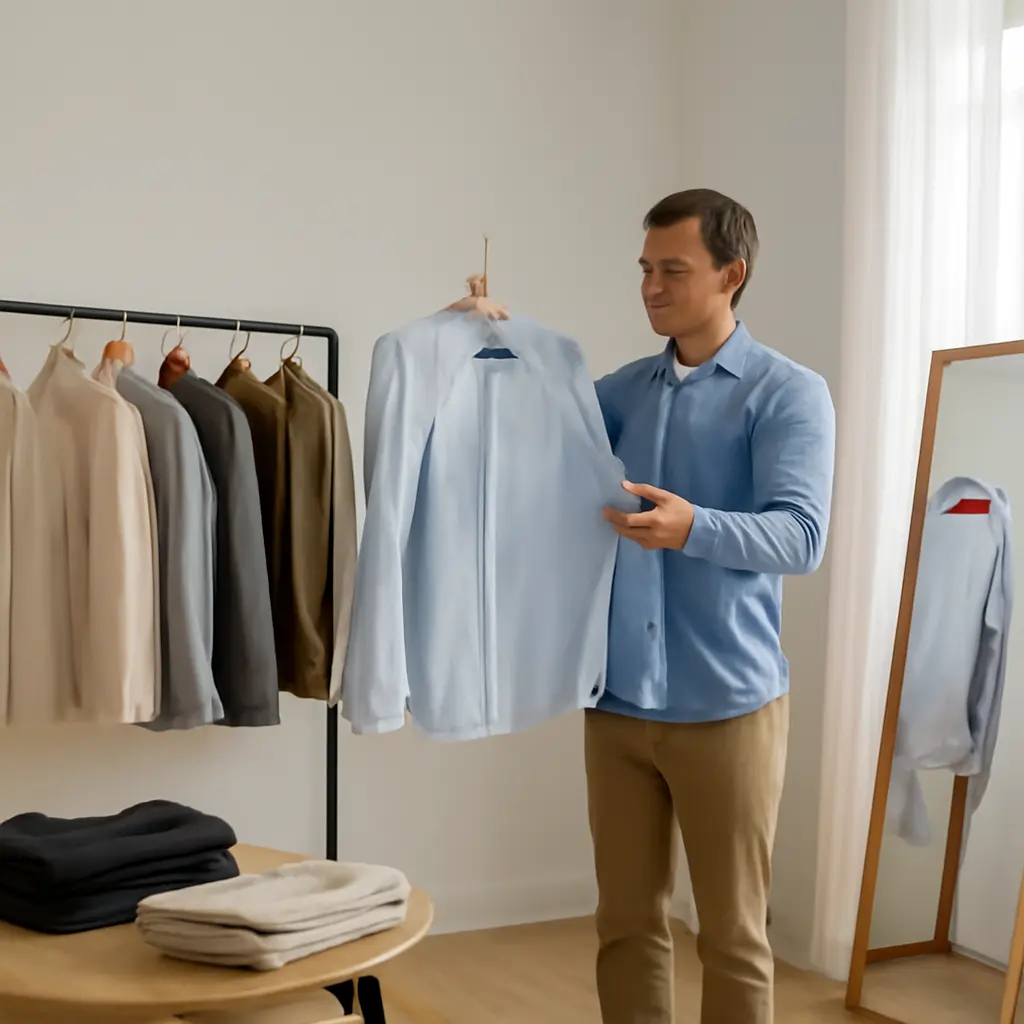
Unisex wardrobe building means choosing clothes across traditional gender categories to create a practical, cohesive closet. It becomes harder than necessary when shoppers treat “unisex” as a narrow aesthetic, buy pieces without checking fit, or chase novelty instead of versatility. Five common mistakes—assuming one cut fits everyone, overlooking fabric and sizing, mistaking gender-neutral for shapeless, ignoring coordination, and buying too much—can make a flexible wardrobe expensive and difficult to wear. These pitfalls matter in a fashion market where the global apparel industry generated an estimated $1.7 trillion in 2023, according to McKinsey and Business of Fashion’s The State of Fashion 2024; even a small number of ill-considered purchases can add up.
Unisex Wardrobe Building: Five Mistakes That Add Unnecessary Complexity
“Unisex” is commonly used for clothing designed or marketed without restriction to a particular gender. It does not mean that every garment will fit every body in the same way. A useful unisex wardrobe instead balances comfort, fit, personal style, and the ability to combine garments across outfits. The five mistakes below show where shoppers tend to make that process more complicated—and how to build a wardrobe with fewer, more useful choices.
Understanding Unisex Wardrobe Building and Its Practical Attributes
Unisex wardrobe building is the deliberate selection of clothing intended to be wearable across gender identities or conventional gender categories. The term describes an approach to design and styling, not a universal sizing standard. The U.S. Federal Trade Commission’s clothing-labeling rules require manufacturers to provide specified fiber-content and care information, but they do not establish a single shared fit system for unisex clothing. Shoppers therefore need to assess each brand’s measurements and garment construction rather than assume that a “unisex” label guarantees a particular silhouette.
A functional wardrobe can include several related categories: shared basics such as T-shirts and sweatshirts; tailored pieces such as trousers and jackets; adaptive or adjustable garments; and expressive items selected for color, print, or shape. Their common attributes are wearability, coordination, suitable fit, and alignment with the wearer’s needs. The following mistakes occur when one of these attributes is treated as an afterthought.
Mistake 1: Assuming One Cut Fits Every Body
A unisex label indicates an intended audience, not a guarantee of identical proportions or fit. Garments can differ in shoulder width, torso length, waist placement, rise, sleeve shape, and ease. A straight-cut shirt may feel comfortable on one wearer but pull across another’s chest or hang too loosely at the waist. The practical correction is to compare garment measurements with a well-fitting item you already own and to check the brand’s size chart before buying.
When possible, evaluate fit through movement as well as appearance: sit, reach, bend, and raise your arms. Pay attention to shoulder seams, armholes, waistband comfort, and whether the garment stays in place. This approach is more reliable than selecting a size based only on a gendered size label, which can vary from brand to brand.
Mistake 2: Ignoring Fabric, Construction, and Care
Two garments with the same cut can behave differently because of fiber, knit or weave, weight, stretch, and finishing. A light cotton jersey T-shirt, a dense cotton sweatshirt, and a stretch-blend top will drape and move differently. Fabric choice also affects warmth, durability, and how easily a garment fits into everyday routines.
The Federal Trade Commission’s textile rules require most covered textile products to disclose fiber content and care instructions. Read those labels as practical buying information: fiber composition can help you anticipate feel and maintenance, while care directions indicate whether a piece suits your laundry habits. A garment that needs frequent special care may be less versatile for someone seeking a low-maintenance capsule wardrobe.
Mistake 3: Confusing Gender-Neutral with Shapeless
Gender-neutral clothing need not be oversized, plain, or without definition. Treating shapelessness as the only neutral option can make outfits feel less intentional and reduce the range of settings in which the clothes work. A relaxed jacket, a straight-leg trouser, or a fitted knit can all be part of a gender-inclusive wardrobe when the wearer likes the silhouette and can move comfortably in it.
Instead of relying on one exaggerated cut, vary proportions deliberately. Pair a roomy top with a cleaner line below, or balance a more fitted layer with a relaxed outer garment. These are styling choices rather than rules: the goal is to create shape that feels personal, not to reproduce a gendered template.
Mistake 4: Buying Pieces That Do Not Coordinate
A versatile item earns its place by working with other clothes already in the closet. Buying a distinctive garment without considering color, occasion, footwear, or layering can leave it difficult to wear. Before purchasing, picture at least three outfits using items you already own. If the new piece works only with another planned purchase, it may create more wardrobe complexity than value.
A simple color framework can help: choose a few base colors, then add accent colors or prints that suit your taste. Consider the wardrobe’s real activities too—work, travel, exercise, or social occasions—so that coordination supports actual use rather than an imagined lifestyle.
Mistake 5: Overbuying in the Name of Versatility
A capsule wardrobe is a limited, intentionally coordinated set of garments; it is not a requirement to replace everything with a prescribed number of basics. Buying duplicates or trend-driven “essentials” can overwhelm a closet, especially when new items do not address a genuine gap. The U.S. Environmental Protection Agency estimated that 11.3 million tons of textiles were landfilled in the United States in 2018, illustrating the broader waste implications of short-lived consumption.
Before buying, identify the specific need, check whether an existing garment can fill it, and consider secondhand options, repair, or alterations. A short waiting period can also separate a considered purchase from an impulse. The aim is not to own as little as possible at any cost, but to own items that are worn, cared for, and useful.
A Simpler Method for Building a Cohesive Unisex Wardrobe
The five mistakes share a common cause: making choices based on labels or trends rather than on how clothes fit, function, and combine in real life. A practical process is to review what you wear most, note gaps, measure garments you already like, and test proposed purchases against your daily activities. Then reassess after wearing new pieces through different outfits and conditions.
- Start with fit and comfort, not the word “unisex” on a tag.
- Check garment measurements, fabric composition, and care requirements.
- Choose silhouettes for personal preference rather than assuming neutral means oversized.
- Confirm that a prospective purchase works with several existing items.
- Buy intentionally and maintain or repair garments to extend their useful life.
Conclusion: Make Unisex Wardrobe Building More Personal and Practical
Unisex wardrobe building becomes easier when shoppers avoid five common missteps: assuming one cut fits everyone, overlooking fabric and construction, equating neutrality with shapelessness, buying pieces that do not coordinate, and overbuying in pursuit of versatility. A gender-inclusive wardrobe is not a fixed uniform; it is a set of garments chosen for an individual’s body, preferences, budget, and routines. Use measurements, care labels, outfit planning, and deliberate purchasing to make each item work harder. For further guidance, consult textile-care information from the Federal Trade Commission and clothing-waste resources from the Environmental Protection Agency.
Sources: McKinsey & Company and The Business of Fashion, The State of Fashion 2024, https://www.mckinsey.com/industries/retail/our-insights/state-of-fashion; Federal Trade Commission, Threading Your Way Through the Labeling Requirements Under the Textile and Wool Acts, https://www.ftc.gov/business-guidance/resources/threading-your-way-through-labeling-requirements-under-textile-wool-acts; Federal Trade Commission, Care Labeling of Textile Wearing Apparel and Certain Piece Goods, https://www.ftc.gov/legal-library/browse/rules/care-labeling-textile-wearing-apparel-certain-piece-goods; U.S. Environmental Protection Agency, Facts and Figures about Materials, Waste and Recycling: Textiles, https://www.epa.gov/facts-and-figures-about-materials-waste-and-recycling/textiles-materials-specific-data